
Concrete Sealing Options for Lasting Floors
A concrete slab can look sound while quietly absorbing water, oil, tyre marks and grime. The right concrete sealing options protect that investment, make cleaning easier and can improve the appearance of a garage, patio, driveway or commercial floor. The best choice is not always the shiniest or most expensive coating. It depends on where the concrete sits, how it is used, its existing condition and the finish you want to live with.
For Sydney property owners, moisture, UV exposure, coastal air in some areas and everyday vehicle traffic all influence how a sealer performs. Good results begin with an honest assessment of the slab and proper preparation, not a quick coat over dirt or old failing paint.
Concrete sealing options at a glance
Concrete sealers generally fall into two groups. Penetrating sealers soak into the surface and protect the concrete from within. Film-forming sealers sit on top and create a visible protective layer. Both have a place, but they deliver very different results.
A penetrating sealer is usually chosen when you want a natural-looking surface with added resistance to water and stains. A film-forming product is better suited to areas where appearance, colour, gloss or stronger surface protection matter. Epoxy flooring systems are a more substantial option again, designed for floors that need a hard-wearing, cleanable finish.
Penetrating sealers for a natural finish
Penetrating sealers, including silane, siloxane and siliconate products, move into the pores of the concrete rather than forming a coating on the surface. They help repel water and reduce the risk of moisture-related deterioration, without changing the look of the slab very much.
This makes them a sensible choice for driveways, pathways, exposed aggregate and outdoor concrete where slip resistance and a low-sheen finish are priorities. Because there is little or no surface film, these sealers are less likely to peel. They also allow the concrete to breathe, which can be useful where moisture vapour is present.
The trade-off is that penetrating sealers do not hide marks, improve an uneven finish or provide the decorative look of a coating. They offer limited protection against heavy oil spills, tyre traffic and abrasion compared with a quality epoxy system. Reapplication is also part of long-term maintenance, particularly in exposed areas.
Acrylic sealers for colour and light protection
Acrylic sealers form a thin film over the concrete. They are commonly used on decorative concrete, coloured concrete and exposed aggregate because they can deepen colour and provide a matte, satin or gloss finish. They are often a practical option where a property owner wants a cleaner, more finished look without installing a full flooring system.
Water-based acrylics tend to have lower odour and are suitable for many residential settings. Solvent-based products can provide stronger colour enhancement and a richer finish, but site conditions, ventilation and product selection need to be managed carefully.
Acrylic coatings are not usually the first choice for a busy garage, workshop or loading area. They can wear faster under vehicle tyres, scuffing and frequent cleaning. Outdoors, UV-rated acrylic products are useful, but the surface may still need maintenance over time to retain its appearance.
Epoxy coatings for garages and work areas
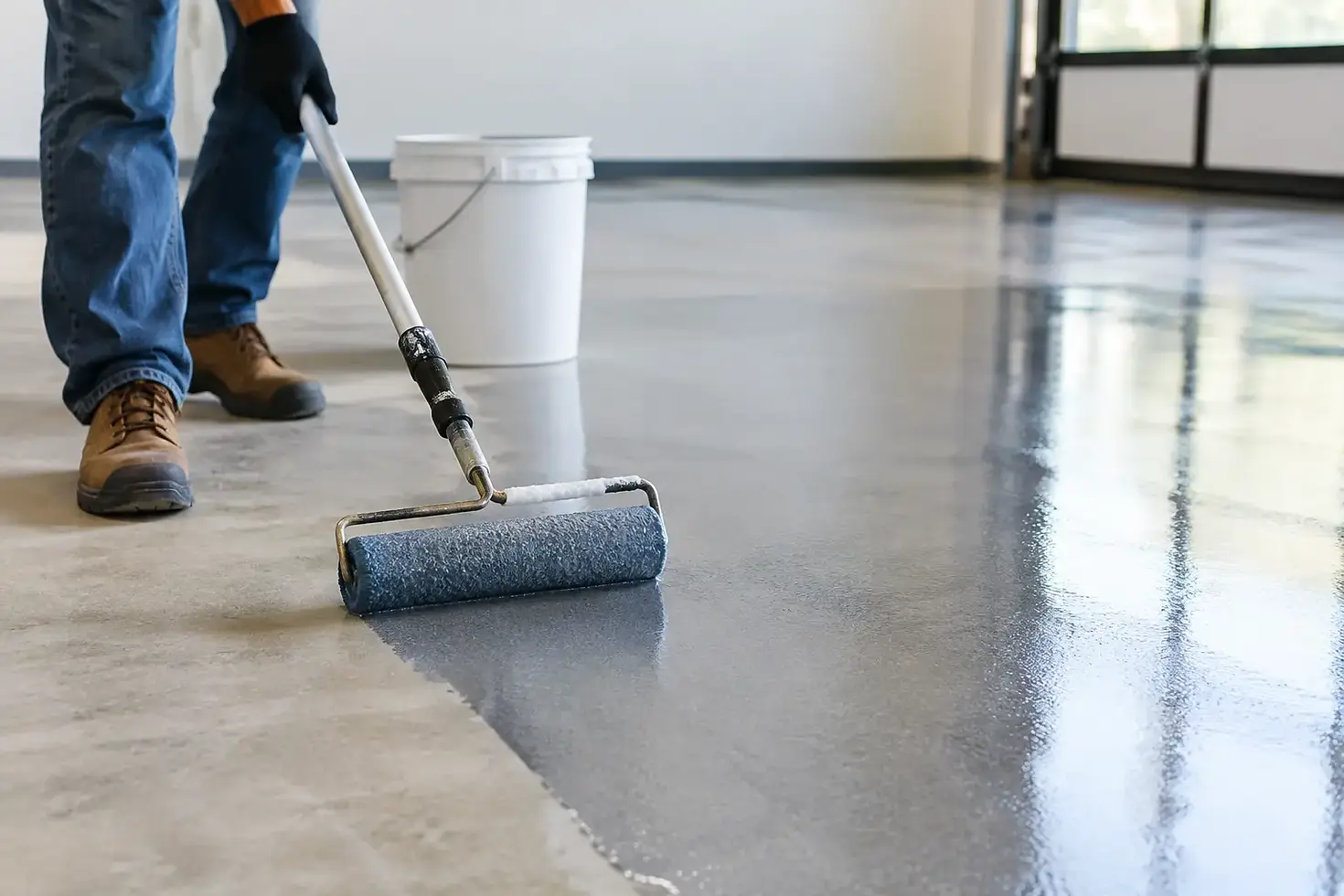
Epoxy is one of the most popular concrete sealing options for garages, workshops, showrooms, storage areas and commercial spaces. Rather than simply sealing pores, epoxy creates a thicker protective layer that adheres to properly prepared concrete. It can resist oil, chemicals, stains and everyday wear far better than many standard sealers.
Epoxy flooring also gives property owners more control over the final appearance. Solid colours can create a clean, modern floor, while decorative flake systems help disguise dust and minor marks. A clear epoxy may be appropriate where the existing concrete has an attractive finish worth showing.
However, epoxy is only as reliable as the preparation beneath it. The slab must be clean, dry enough for the system, mechanically prepared where required, and free of weak coatings or contaminants. Oil-soaked concrete, moisture pressure and poor surface profiling are common reasons an epoxy floor can bubble, delaminate or wear prematurely.
Epoxy can yellow when exposed to strong sunlight. For garages with regular UV exposure or outdoor-adjacent areas, a UV-stable topcoat may be recommended. A non-slip additive is also worth considering around wet entrances, ramps and work zones. A glossy floor may look impressive, but it should still be safe and practical for its intended use.
Polyurethane and polyaspartic topcoats
Polyurethane and polyaspartic coatings are often used where higher UV resistance, abrasion resistance or a faster return to service is needed. They may be installed as part of a multi-coat flooring system, commonly over epoxy.
A polyurethane topcoat can help protect an epoxy base coat from scratches and sunlight while providing a range of sheen levels. Polyaspartic systems can cure quickly, which is useful when downtime needs to be kept to a minimum in a commercial setting. They can be a strong option for garages and business premises that cannot be out of action for several days.
These systems require skilled application and close attention to temperature, humidity and preparation. Faster curing does not mean shortcuts are safe. If the slab has moisture issues or the coating is applied outside the product’s conditions, the finish may not last as intended.
Concrete densifiers for polished or high-traffic floors
Concrete densifiers are different from conventional sealers. They react with the concrete to harden and densify the surface, reducing dusting and improving resistance to wear. They are often used in warehouses, retail spaces and polished concrete applications.
A densifier is a good fit where the goal is a durable, low-maintenance concrete finish rather than a coloured coating. It will not provide the same chemical resistance or decorative coverage as epoxy, and it will not conceal cracks or patching. Its value is in strengthening the slab’s surface while retaining a natural concrete appearance.
Choosing the right sealer for each area
Start with the use of the space. A residential driveway benefits from water resistance and a finish that remains safe underfoot, so a penetrating sealer is often suitable. A patio with decorative concrete may suit an acrylic sealer that brings out colour while offering light protection.
Garages need a more considered approach. If the floor sees occasional parking and light storage, a well-prepared epoxy system can provide a clean, easy-to-maintain surface. If it is used for mechanical work, frequent washing or heavier equipment, a higher-build epoxy with a durable topcoat may be a better investment.
For commercial floors, consider foot traffic, wheeled equipment, cleaning chemicals, safety requirements and downtime. A retail space may prioritise appearance and low odour during works. A warehouse may need abrasion resistance, line marking and slip control. One product rarely suits every commercial environment.
Preparation determines the life of the finish
The most attractive coating cannot compensate for poor preparation. Before sealing, the concrete should be inspected for cracking, spalling, laitance, old paint, oil contamination and moisture concerns. Repairs need to be completed with compatible products and allowed to cure properly.
Cleaning alone is not always enough. Many epoxy and high-performance coating systems need mechanical grinding to create the right surface profile for adhesion. This removes weak material and opens the concrete surface so the coating can bond properly. It is dusty work without the right equipment, which is why professional dust control and site protection matter in occupied homes and businesses.
Moisture testing is equally important. Concrete can hold moisture long after it looks dry, especially on ground-level slabs. Applying a non-breathable coating over excessive moisture can lead to blistering or coating failure. In some cases, a moisture barrier system may be needed. In others, a breathable penetrating sealer is the more sensible choice.
Appearance, maintenance and realistic expectations
A sealed concrete floor is easier to clean, but no finish is maintenance-free. Sweep grit regularly, clean spills promptly and use cleaning products suitable for the coating. Harsh degreasers, abrasive pads and dragging heavy metal items across a coated floor can shorten its life.
Gloss levels deserve practical thought too. High gloss reflects light and can make a space feel brighter, but it also shows dust, scratches and tyre marks more readily. Satin and matte finishes are often more forgiving in busy areas. Decorative flakes can also improve visual texture and make minor wear less obvious.
The right system should match the property, the budget and the expected level of use. A basic sealer can be excellent value for an outdoor path, while a garage or commercial floor may justify a professionally prepared epoxy system. Asking for clear advice on preparation, product type, expected durability and after-care helps avoid surprises once the work is complete.
A well-sealed concrete surface should feel like a practical improvement, not another maintenance problem. When the slab is assessed properly and the finish is selected for real conditions, it can stay cleaner, safer and better looking for years.


Comments