
Best Coatings for Concrete Garages Compared
A bare garage slab quickly shows its age. Tyre marks, oil drips, dust and moisture can leave concrete looking stained and difficult to clean, particularly after a hot Sydney summer or a wet run of weather. The best coatings for concrete garages do more than improve the appearance - they create a sealed, hard-wearing surface that is easier to maintain and better suited to everyday use.
The right choice depends on how the garage is used, the condition of the slab, your budget and how quickly the area needs to return to service. A coating that works well for light household parking may not be the right system for a workshop, storage area or commercial bay with regular vehicle movement.
Best coatings for concrete garages
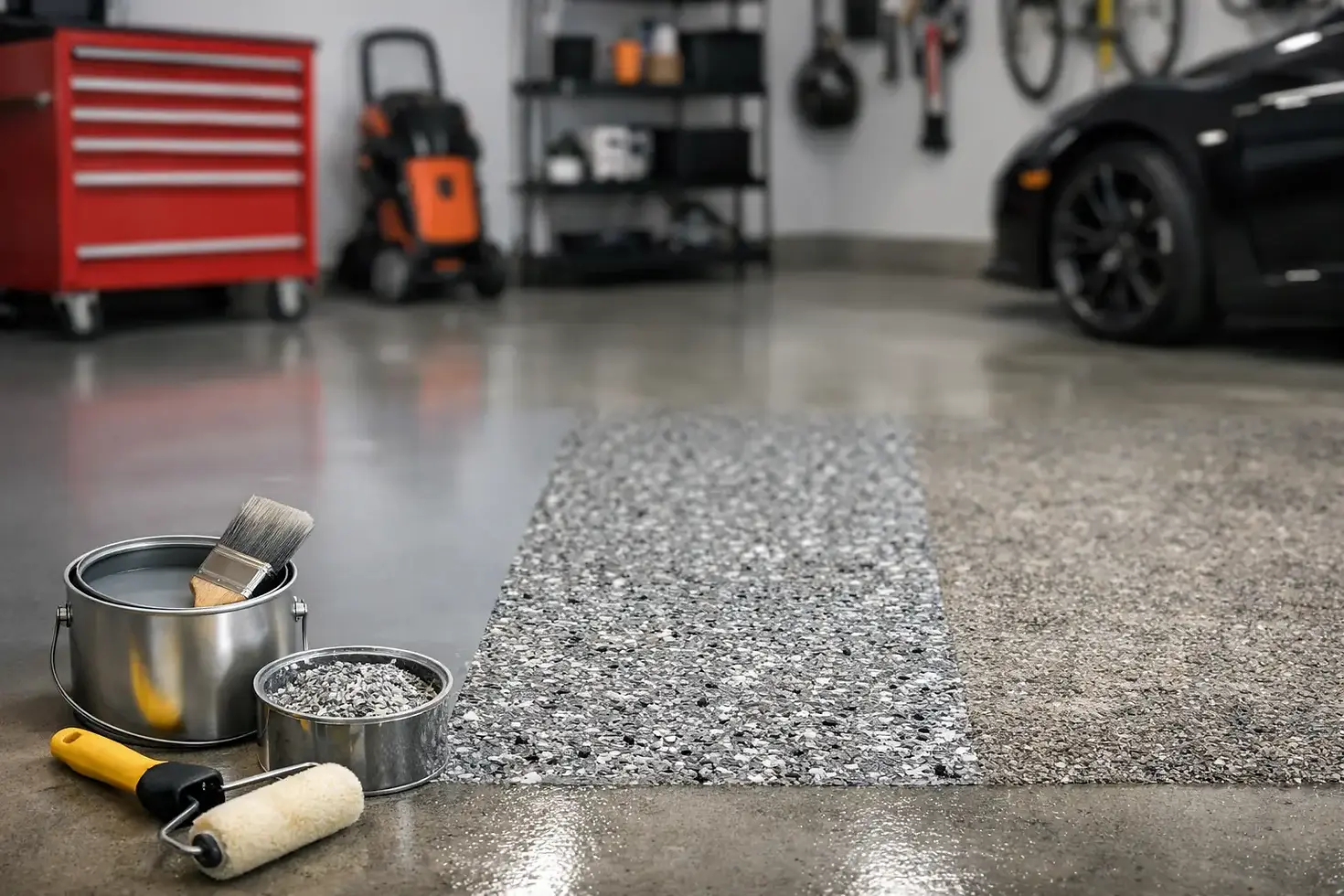
For most residential garages, a professionally applied epoxy coating offers the best balance of durability, appearance and value. It bonds strongly to prepared concrete, resists many common spills and can be finished in a wide range of colours. Decorative flakes can also be incorporated to soften the look of dust and tyre marks while providing a practical, textured finish.
That said, epoxy is not the only suitable option. Polyaspartic systems are valued for fast curing and strong UV resistance, while polyurethane topcoats can add further protection where abrasion, sunlight or chemical exposure is a concern. Concrete sealers and garage paints have a place too, although they generally offer less protection than a full resin flooring system.
The coating itself matters, but preparation matters just as much. A premium product applied over weak, contaminated or damp concrete can still fail early. Proper assessment and surface preparation are where a lasting floor begins.
Epoxy coatings: the proven all-rounder
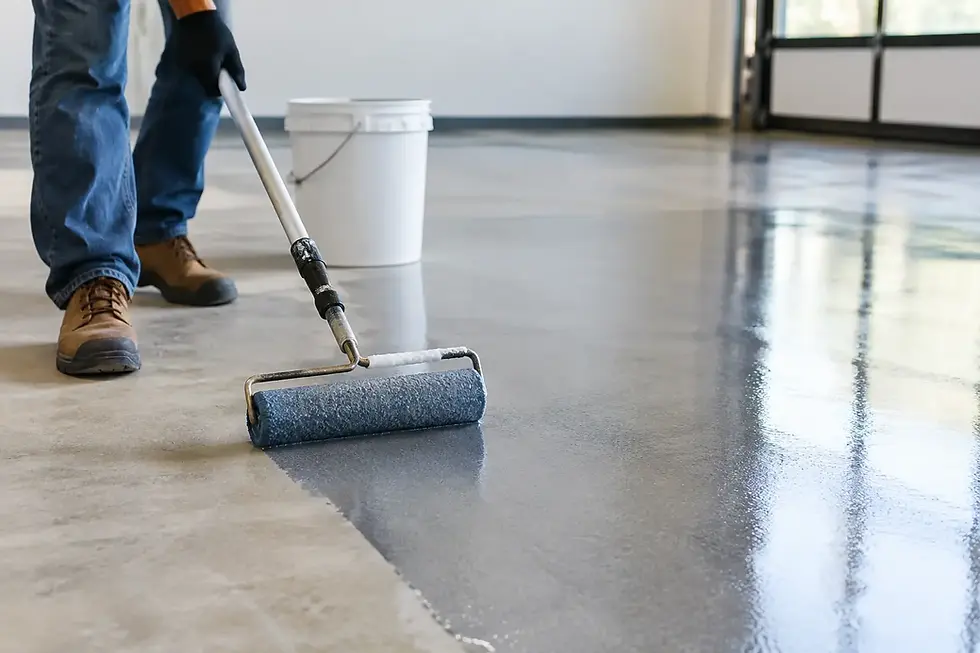
Epoxy is a two-part coating that cures into a thick, hard surface. It is a popular choice for garages because it handles regular foot traffic, parked cars, dropped tools and minor oil or fuel spills far better than uncoated concrete. It also creates a clean, finished appearance that can make an older garage feel brighter and more organised.
A standard epoxy system is well suited to enclosed residential garages, especially where the owner wants good performance without moving to the cost of a faster-curing specialist system. The coating can be built up in layers, with a pigmented base coat and clear protective coat for greater depth and durability.
Epoxy does have trade-offs. It needs correct curing conditions and can take several days before it is ready for vehicle traffic. It may also yellow or lose gloss when exposed to strong, ongoing sunlight. This is less of an issue in a fully enclosed garage, but it should be considered for open carports, garages with wide north-facing openings or areas that receive direct afternoon sun.
Polyaspartic coatings: fast curing and UV stable
Polyaspartic coatings are part of the polyurea family and are often chosen when a quicker turnaround is needed. Depending on the system and site conditions, they can be installed and returned to service much sooner than conventional epoxy. Their resistance to UV exposure also makes them a strong option for garages that receive plenty of natural light.
These coatings are highly durable and can perform well against stains, abrasion and hot tyres. They are commonly used with decorative flakes and a clear topcoat, producing a professional finish with good long-term colour stability.
The main consideration is cost. Polyaspartic systems are usually more expensive than a standard epoxy floor, and their fast cure time leaves less room for error during installation. They need experienced application, careful mixing and a properly prepared slab. For busy households, commercial spaces or projects with limited downtime, the higher upfront investment can be worthwhile.
Polyurethane topcoats: added protection where it counts
Polyurethane is often used as a topcoat rather than as the main coating layer. Applied over epoxy, it can improve scratch resistance, UV stability and protection against certain chemicals. It can be a sensible addition in garages used as workshops, vehicle detailing spaces or multi-purpose areas where the floor receives more than ordinary parking traffic.
A polyurethane topcoat can also help retain the finish of a decorative epoxy floor near garage doors and windows. It is not always necessary for every home garage, but it is worth discussing when durability and colour retention are priorities.
Concrete paint and sealers: a lower-cost refresh
Concrete paint and penetrating sealers are sometimes described as garage floor coatings, but they do a different job from epoxy or polyaspartic systems. A sealer can reduce dusting and make the concrete easier to clean. Concrete paint provides colour and a neater appearance at a lower initial cost.
For a lightly used storage space, this may be enough. However, paint is thinner and more likely to wear through, peel or mark under tyres than a professionally installed resin coating. A sealer will not hide existing stains or produce the same finished look. These options are best treated as practical surface improvements rather than long-term heavy-duty flooring.
The slab condition decides what will last
The best-looking coating cannot compensate for a poor concrete base. Before any system is selected, the slab should be checked for cracks, flaking, old coatings, oil contamination and moisture. Hairline cracks can often be repaired as part of the preparation process, while larger movement cracks may need a more considered solution.
Oil and grease are especially important. If contaminants have soaked deeply into the concrete, they can interfere with adhesion. Surface cleaning alone is not always enough. Mechanical grinding is commonly used to remove weak material, open the concrete pores and provide the profile needed for a coating to bond properly.
Moisture also needs attention. Concrete can release moisture vapour even when it appears dry on the surface. If moisture pressure is too high, a coating may blister or detach. In some situations, a moisture-mitigation primer may be needed before the main coating system is applied.
This preparation work is not an optional extra. It is the difference between a floor that looks good for a short time and one that continues to perform after years of use.
Choosing the right finish for your garage
Start with the way the space will actually be used. A garage that only houses the family car has different needs from one used for mechanical work, gym equipment, bikes, storage and regular DIY projects. A light grey or mid-grey flake finish is often practical because it helps disguise dust and minor marks. Very dark floors can show dust, while plain white floors can show tyre marks more readily.
Slip resistance should also be considered. A glossy, smooth coating can look impressive, but garages may become slippery when wet. Decorative flakes or a suitable non-slip additive can provide better grip without making cleaning difficult. The right level depends on whether the area is mainly dry, exposed to rain at the entrance or used for washing vehicles.
If the garage opens directly to sunlight, ask about UV-stable topcoats or polyaspartic options. If you need the floor back quickly, a fast-curing system may be more suitable than epoxy. If cost is the main driver and use is light, a quality sealer may provide a sensible short-term improvement. There is no single answer for every concrete garage.
What a professional installation should include
A quality garage floor should not be quoted as a simple coat of paint. The scope should clearly cover slab inspection, repairs, mechanical preparation, cleaning, primer where required, the selected coating layers and curing time before use. It should also explain whether decorative flakes, non-slip additives and protective topcoats are included.
Professional installers should keep the work area tidy, protect nearby surfaces and communicate clearly about access during the curing period. Rushing vehicle traffic onto a newly coated floor can damage an otherwise well-installed system, so the recommended cure time should be followed.
At BaBa Painting Services, the focus is on proper preparation, clear advice and a finish suited to the condition and use of the space. A free on-site quotation is an opportunity to assess the slab rather than guess at what sits beneath the surface.
A garage floor is a working surface, not just a backdrop for the car. Choose a coating system that matches the traffic, sunlight and wear it will face, and give preparation the same importance as the finish you see on day one.


Comments