
Best Finishes for Concrete Floors in Your Space
A bare concrete slab can be hard-wearing, but it is rarely ready to perform as a finished floor. Dusting, stains, tyre marks, moisture and a rough appearance can quickly become issues. The best finishes for concrete floors depend on how the room is used, the condition of the slab and the result you want to achieve - not simply which coating looks best in a brochure.
For a Sydney garage, workshop, retail space or living area, the right finish should be practical as well as attractive. Good preparation matters just as much as the product. Cracks, oil contamination, rising moisture and weak surface concrete need to be addressed before any coating or finish is applied.
Start with how the floor will be used
A garage floor has very different demands from a polished concrete living room or a warehouse walkway. Vehicles, dropped tools, chemicals and hot tyres call for a high-build protective coating. A home interior may place more value on a clean, low-maintenance look. In a commercial property, slip resistance, cleaning requirements and downtime often guide the decision.
It also pays to consider the age and state of the concrete. Newly laid slabs need adequate curing before most finishes can be installed. Older slabs may require grinding to remove failed coatings, levelling compounds, adhesives or surface contamination. If moisture is moving through the slab, a finish that is not designed to manage it can blister or peel.
The best result comes from matching the system to the floor, then carrying out the preparation properly.
Epoxy flooring for garages and hardworking areas
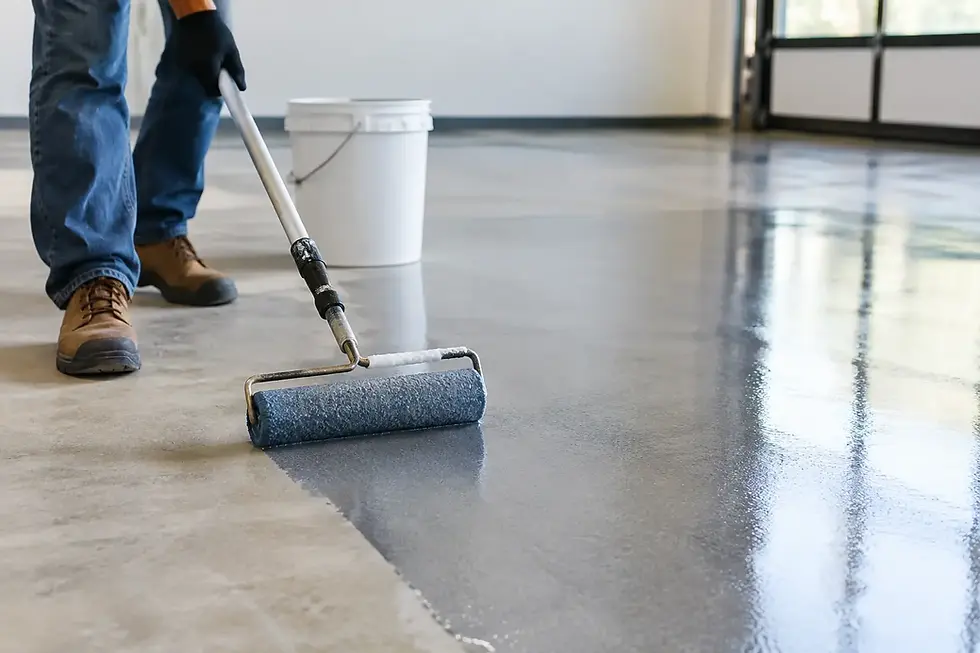
Epoxy is one of the most popular concrete floor finishes for garages, workshops, warehouses, showrooms and commercial spaces. It forms a tough, protective layer over the concrete and is available in a wide range of colours and finishes.
A professionally installed epoxy floor is resistant to many common stains, including oil, grease and household chemicals. It creates a neat, easy-to-clean surface and can make a dark garage or work area feel brighter. For landlords and commercial property managers, it can also improve the presentation of a space without the cost of replacing the slab.
Plain epoxy and flake epoxy
Plain-colour epoxy provides a clean, modern finish that suits workshops, storage areas and some commercial interiors. It is a good choice where a simple, consistent appearance is preferred.
Flake epoxy includes coloured vinyl flakes broadcast into the coating, then sealed with a clear topcoat. This produces a more decorative, textured look and helps disguise dust, minor marks and everyday wear. It is particularly well suited to garages, patios and utility areas where a completely smooth gloss floor could show every speck of dirt.
Epoxy does have limits. Surface preparation must be thorough, and moisture testing may be needed before installation. A smooth glossy finish can also be slippery when wet, so an anti-slip additive should be considered for entryways, wet work areas, ramps and commercial settings.
Polished concrete for a clean architectural look
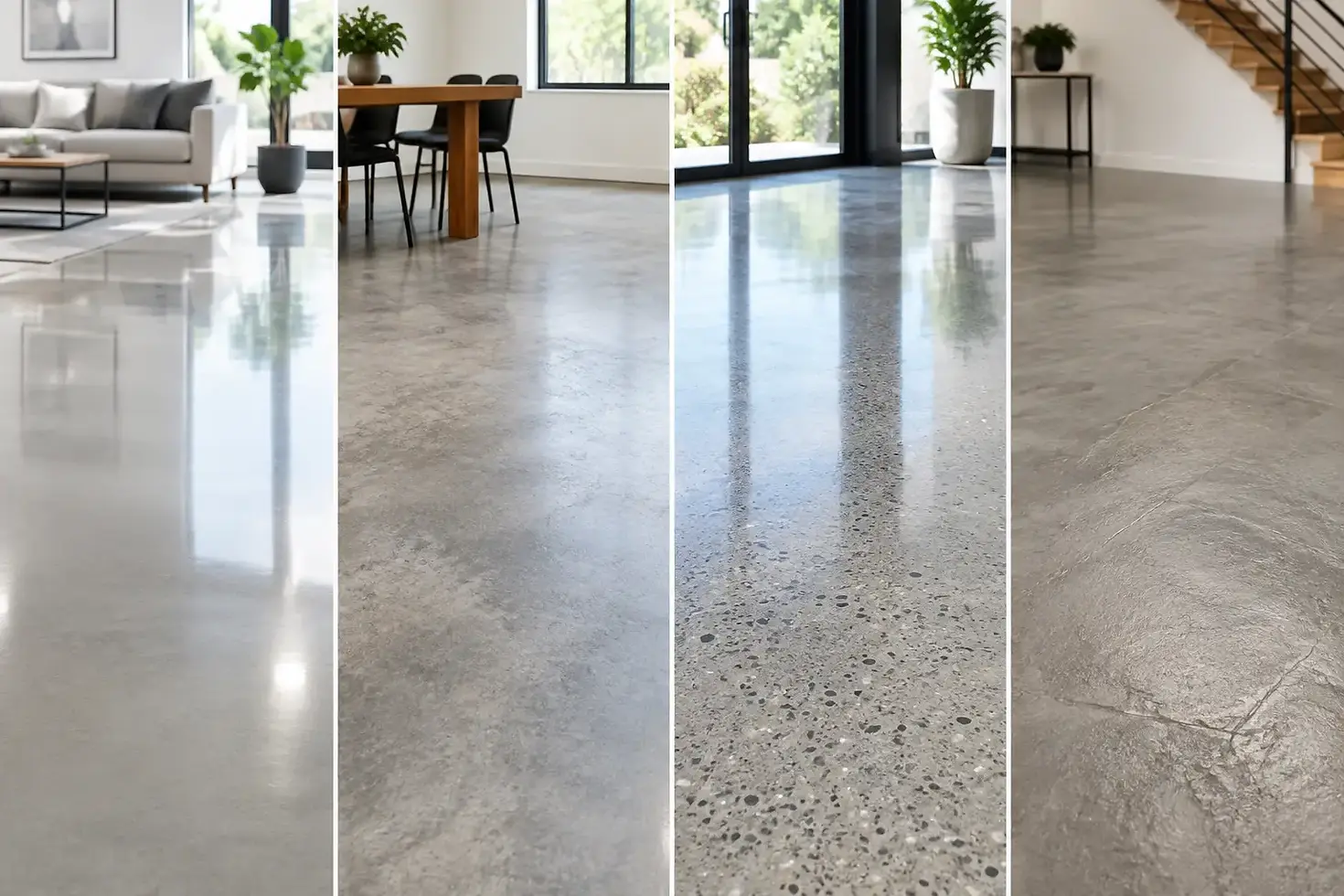
Polished concrete is not a coating placed over the slab. The existing concrete surface is mechanically ground, refined and polished to achieve the desired level of sheen. The result can range from a subtle matte finish to a highly reflective floor with visible aggregate.
This finish suits modern homes, cafes, retail spaces, offices and showrooms. It is durable, easy to maintain and works well with underfloor heating in suitable projects. Because the floor is the slab itself, there is no thick coating layer to chip in the same way as paint or epoxy.
The trade-off is that polished concrete depends heavily on the slab beneath it. Repairs, patching, old stains and uneven areas may remain visible or become more noticeable once the floor is polished. It is best for slabs with good structural condition and for owners who appreciate a natural, slightly varied finish rather than a perfectly uniform surface.
Polished concrete can feel cool underfoot, particularly in winter, and may not be the most economical option where a slab requires extensive repairs. A professional assessment will clarify whether the concrete is suitable before work begins.
Grind and seal for a practical middle ground
Grind and seal gives concrete a refined appearance without the full process and cost of high-level polishing. The surface is mechanically ground to remove imperfections and expose the desired amount of aggregate, then protected with a clear sealer.
It is a practical choice for homes, retail premises and light commercial areas where appearance matters but a mirror-like polish is not required. The finished surface can be matte, satin or gloss, depending on the sealer selected. It often delivers a more natural concrete look than epoxy while offering more protection than an untreated slab.
Maintenance requirements depend on the sealer. In high-traffic areas, the protective top layer may need reapplication over time. Gloss sealers can also show scratches and scuffing more readily than a lower-sheen option. Choosing the right sheen for the setting is a small decision that makes a noticeable difference in day-to-day upkeep.
Concrete paint for low-traffic surfaces
Concrete paint is generally the most budget-friendly way to improve the look of a concrete floor. It can work well for low-traffic storage rooms, covered patios, utility areas and spaces that do not face heavy vehicle use or regular chemical spills.
The main advantage is cost and flexibility. Paint is available in many colours and is relatively straightforward to refresh when it eventually wears. However, it is not a substitute for a professionally specified epoxy system in a garage or commercial workspace. Painted floors can wear through, mark under tyres and peel if the concrete has not been cleaned, repaired and primed correctly.
For property owners looking for a short-term visual improvement, concrete paint may be suitable. For areas that need long-term protection, spending more on preparation and a heavier-duty finish usually represents better value.
Sealed concrete for simple protection
A clear penetrating sealer is a useful option when you want to preserve the natural look of concrete rather than add colour or shine. It helps reduce dusting and makes the slab more resistant to water, stains and general soiling.
This approach is common in storage spaces, plant rooms, workshops and some outdoor covered areas. It will not hide cracks or transform a rough slab into a decorative floor, but it can make an existing concrete surface easier to maintain. Some sealers darken the concrete slightly, while others leave little visible change, so testing a small area first is worthwhile.
For external areas, select a product designed for UV exposure and weather conditions. Indoor-only sealers may not perform well in direct sun or regular rain.
Preparation is what makes a finish last
Even premium products cannot compensate for poor surface preparation. Before a concrete floor is finished, the surface should be inspected for cracks, loose material, moisture issues, old coatings and contamination from oil or chemicals.
Grinding is often necessary to create a clean, sound surface with the right profile for adhesion. Cracks should be repaired appropriately, while joints may need to remain flexible rather than being filled rigidly. The floor must also be clean and dry at the right stage of the work.
This is where lower-priced quotes can become costly later. Skipping preparation may save time at the start, but it increases the risk of peeling coatings, uneven sheen and early wear. A reliable contractor should explain the preparation required, the finish being proposed and any site conditions that could affect the result.
Choosing the right finish for your property
For a garage or workshop, epoxy or flake epoxy is often the strongest all-round choice because it offers protection, easy cleaning and a finished appearance. For a living space, office or showroom with a quality slab, polished concrete can provide a durable and distinctive result. Grind and seal is a sensible option when you want the character of concrete with a more controlled budget, while paint and simple sealers suit lower-demand areas.
There is no single best answer for every slab. The right concrete floor finish is one that fits the traffic, moisture conditions, cleaning needs and appearance of the space. Before committing, arrange a site inspection and ask for clear advice on preparation, slip resistance, curing time and ongoing care. That conversation will help you choose a floor that looks professional on day one and continues to work hard for years.


Comments